What are the most popular board and card games? (Both native Japanese games and foriegn games)
[ o ] Life in Japan [ o ]
Thu, 04/24/2014 - 18:18
#52

Another question about Japan...
Fri, 04/25/2014 - 00:01
#53

@ Markus-Aurelius
Well, there are the traditional board games such as go and shougi (also known as Japanese chess). Othello
(sometimes called Reversi) is also popular, perhaps due to its similarity to go.
Japanese like puzzle games found in books such as Sudoku.
Card games for young people include the still popular Pokemon, Yuugi, and whatever other trading card game that is currently hot. I see Uno around, too.
Fri, 04/25/2014 - 23:44
#54
Convenience Shopping
Foreigners to Japan get shocked by a lot of things, but the sheer number of convenience stores ranks right up there at the top.
Japanese people place a high emphasis on freshness – fresh fruits and vegetables, freshly prepared meals, fresh fish and meat. Consequently, they do not store a lot of food in their homes and shop for food much more frequently. (Every day is not uncommon)
People also love to pick up a snack or drink or, heck, anything since convenience stores seem to sell just about everything. But the most bought items are o-bento meals and onigiri (rice balls) and drinks.
The main chains are 7-Eleven, Circle K, FamilyMart, Lawson, and Ministop, but there are a lot more. They are an essential part of the Japanese lifestyle.
Fri, 04/25/2014 - 23:42
#55
A Festival (matsuri)
Japan has several unique and important national cultural festivals, but there are also thousands of local ones, each with its own unique characteristics and traditions.
The Ukai (cormorant bird) Festival in my area is rather well-known for its interesting use of the bird for fishing. A team of birds tethered to a boat. The birds plunge under the surface of the water and come up with a small Japanese trout. The tether prevents them from swallowing the fish, however, and the fisherman retrieves the fish from the bird’s mouth. Once a sufficient number of fish have been collected this way, a chef prepares a meal and serves the guests on the boat.
The whole affair is conducted at night with the only illumination coming from pine torches lit on the boats for a visually spectacular and delightful culinary experience.
Tue, 04/29/2014 - 22:49
#56
hot springs
onsen are hot springs resorts or facilities such as the hotels or inns around the hot springs. There thousands of onsen all over Japan. Some are small local places and others are huge resorts with amusement parks. There are both outdoor and indoor hot baths, and some nicer inns have private baths in the rooms. Most also serve an excellent traditional Japanese meal. They are wonderful places for a weekend date or company retreats. Before entering a public onsen, people are usually required to shower in traditional communal shower room.
Oh, and I know what you want to ask – do men and women relax in the hot springs naked together? Only in private rooms or in places that require swimsuits. (Sorry, fellas.)
Thu, 05/01/2014 - 02:27
#57
Cross-dressing
Cross-dressing, men dressing as women, is surprisingly popular and common in Japan. Just as men played the female parts back in Shakespeare’s day, so too did Japanese men perform the female roles in the traditional Kabuki plays, a custom which persists even to this day.
In performances such as TV shows, cross-dressing is still a very acceptable form of mostly humorous entertainment. Usually, the entertainer is fairly obviously a man. Others may be more professional in their transformation. Some men have a talent for appearing as truly beautiful women. For others it is a hobby – a hobby with its own magazines and clubs.
And it’s not limited to the funkier areas of Tokyo. Such men can even be seen in that kind of urban /rural area I live in. Odds are, though, you won’t know one when you’ve seen one.
Sun, 05/04/2014 - 17:05
#58
Synchronization in Japan
I think if I had to choose just one word to describe Japan, I would choose “synchronized”.
You have seen some of the amazing synchronization videos on Youtube of Japanese groups. Japanese people seemed thrilled to do things simultaneously. Japanese are not great singers and they are even worse dancers, but a lot of that can be covered up by doing it in unison.
The country’s legal system is guided by “harmony” as the central tenet.
The trains and subways are incredibly punctual and organized.
The citizens find comfort in their homogeneity. People dress very similarly and take vacations at the same time.
Reading the mood of a group and an ability to fit in harmoniously are considered to be important social skills. When I conduct job interviews, one of the questions my manager asks me “Is that someone you’d want to work with?”
It’s not only school children who wear uniforms – office and factory workers do, too. And the lack of variety in the selection of dark colored businessmen’s suits is basically a uniform as well.
All this pressure to fit in has a high psychological toll. The proportion of Japanese people who are socially dysfunctional to outright mentally ill is quite high. Many Japanese people who experience the individual freedom of expression found in many Western countries are loathe to return to the confining social structure of Japan.
It’s a wonderfully safe, clean, and comfortable country to live in – if you are willing to fit in as best you can.
Mon, 05/05/2014 - 04:15
#59
Today, May 5th, was Kids’ Day in Japan (really, more Boys Day since there is a Girls Day on March 3rd) in the middle of Golden Week vacation, and I went to a castle about an hour from my home.
The castle itself is quite small, but it’s surrounding gardens are very lovely.
Sun, 05/11/2014 - 03:49
#60
Miscellaneous Sights from the City
In this album you’ll see pictures described below.
Masks
People commonly – and I mean really Commonly – wear masks in Japan to prevent the spread of germs or allergies. It would be totally weird in the USA but completely accepted in Japan,
Celebrity Ad Campaigns
Lots of male movie stars – usually older ones – like Clooney, Willis, Schwarzenegger, Stallone have endorsement ads in Japan.
Pair Look
Couples often wear matching outfits in Japan. Cool or dorky?
Synchronized Dance Competitions
Japanese love to do things in unison. These pictures are from a central park team dance competition.
Tue, 05/13/2014 - 23:20
#61

Hope ya don't mind me...
Pretty neat and informative thing you got going here! But I have a few things to mark:
Being one quite familiar with Asian customs(A.B.C*, but hey, I know my share) ... and some extra clarifications too.
Stores:
7-Eleven, FamilyMart... Seen this in Hong Kong, and Taiwan too.
Those are saviours for foreigners who don't know the language. ^_^
Masks:
It's pretty common in other neighboring Asian countries from when I visited within the last few years - Japan, Taiwan, Hong Kong, Thailand, ect. (Yeah, I go around Asia a bit; heading to Korea this summer^^)
Couple Matching:
I've seen that in other Asian countries too. I know in Korea especially they endorse a lot of couple wear to advertise their status and such.
(Basically, it's not just Japan that does a lot of these things; the probably a good 98% of the other "big" Asian cultures probably do too. Which wouldn't really be surprising since they were all built off from one another waaaay back when..)
*That means American-Born-Chinese
Aaannndd now I wander off and leave this post back in the palms of Mawa :o
Fri, 05/16/2014 - 20:10
#62
Cram Schools
Tests rule the life of children in Japan. Tests determine what school you can get into, which in turn heavily determines what level of job you can get. These tests are competitive since everyone is competing for a limited number of slots at the junior hitgh, high school, college, and company of their choice.
Consequently, in addition to a crushing homework workload and mandatory extracuricular club particiption, students often go to one or more cram schools in the evenings. These cram schools typically are not cheap, ranging from a neighborhood group lesson at $5/hour to a corporate setting for over $100/hour.
The majority of my income comes from teaching at a cram school. My students range from jr hi students to doctors and lawyers. A private 40-minute lesson with me costs - are you sitting down? - $80. Yes, people are both able and willing to pay $120/hour for an English lesson from me! (Crazy, huh?)
Don't think I'm getting rich off these classes, though. Students are paying the company I work for, not me.
Teenagers have a pretty busy stressful life, but college students are basically rewarded with a 4-year vacation before entering into a job that will most likely require 12-hour days.
I doubt any country works harder than the Japanese.
Fri, 05/16/2014 - 21:58
#63

Hi.
Since English is your first language, were you born in the US, or in Britain, or taught English from an early age? I love the pictures thus far!
Sun, 05/18/2014 - 15:25
#64
Massage Parlors, Beauty Salons, and Aesthetic Spas
People in Japan get massages fairly regularly. There are local places all over Japan where you can get a 30-minute or 60-minute massage for about 1$/minute. People get a massage for the health benefits mainly, and partly for the pleasure of it. It’s just a very normal part of life and has none of the shadowy taint of backroom prostitution that massage parlors in the USA have.
One of the things that causes culture shock in Japan is the sheer number of Beauty Salons. Japanese people must get haircuts a lot more frequently than Americans do in order to support the vast number of little hair salons that litter the country. One chain has the name Samson & Delilah, a surprisingly humorous Biblical reference in a country where the population is less than 1% Christian (but nearly all of the weddings are). Many of these places offer manicures and pedicures as well. Many young women spend $50 for a nail art treatment that will last for about a month. Do-it-yourself kits are also popular.
Finally, for the woman who wants that extra bit of beauty help, there are Aesthetic Spas, or Este Spa as they are called in Japan. Aesthetics relates to beauty, or what is pleasing to the eyes and other senses. Such places offer massages and skins treatments mainly, but in an atmosphere of relaxation where they spoil you a bit. The attendants sometimes dress like nurses to give it somewhat of a clinical feel, but they are a nice treat every once in awhile.
@ Kurapika - English is my first language as I grew up mainly in California but spent a fair amount of time with family in Japan while I was growing up, too.
Tue, 05/20/2014 - 21:44
#65
Kaiten Sushi
Sushi is raw fish, mostly. Sometimes the fish is lightly seared, and in some modern places it’s not even fish at all. It could be eggs, duck, raw horse meat, or even bacon.
There are four main ways you can buy sushi: a prepared lunch at a supermarket, a restaurant that serves sushi, a traditional sushi bar that serves only sushi, or my favorite way – $1/plate conveyor belt sushi restaurants.
The $1/plate conveyor belt sushi restaurants (kaiten sushi) have a lot of things that kids love too, like juice, cake, fruit, and French fries. You can snag something off the conveyor belt or order from the screen at your table and wait until it gets sent to you. I’m somewhat of a light eater, so I generally have 6-7 plates. It’s not a place you’d go on a date, but it’s a fast, fun, and inexpensive place to go with friends or family.
Thu, 05/22/2014 - 09:06
#66

Orly
Japan too gud
Sun, 05/25/2014 - 05:24
#67
Writing in Japanese and karaoke
Japanese has three forms of writing.
First, there are kanji characters which are adaptations of Chinese characters.
Second, there is katakana, which is mainly used to write out foreign words.
Third, there is hiragana, which is used in sentences.
Here’s what katakana looks like in the katakana alphabet (カタカナ), and here’s what it looks like in hiragana (かたかな).
Karaoke (pronounce it like it’s Spanish, and not the incredibly warped “carrie-okie” word most English speakers use) is usually written with the katana alphabet as カラオケ taken from the Japanese word kara 空 which means "empty" and ōkesutora (orchestra) オーケストラ . It’s one of those things that started in Japan and became popular around the world.
A small group of people, usually college age or close to it (although people of any age can and do enjoy it), rent a room. They choose songs from a song menu, then the lyrics appear on a screen and the music plays. Then someone (or someones) sings the song to the rest of the group.
Rooms are rented by the hour for reasonable rates. You can order food and drinks (which is where the establishments make their money), and generally have a great time – perfect for the group dates that Japanese prefer!
Tue, 05/27/2014 - 14:33
#68

Hai
Can I ask a question? What is law enforcement like? I know law enforcement is rather harsh in certain places in the Far East, and I was wondering if it was the same in Japan.
Also, where does the respect for police come from? I have also heard that they do not need warrants, and purely ask to search places.
Tue, 05/27/2014 - 16:13
#69
police officers
There are 2 Golden Rules in Japan: Safety and Harmony.
There are laws, of course, but the only ones I ever see getting enforced are speeding tickets. When you get caught for speeding, usually as the result of a coordinated radar check and pull over set up, the police sit you in the back seat of their squad car and ask you a bunch of personal questions and basically intimidate you and make you feel bad. And then top it off by making you write and sign a confession acknowledging you were being naughty. (No, I've never gotten a ticket in Japan, but I hear stories from acquaintances.)
Why do they act like butt-holes when they catch you speeding? Because you violated one of the Golden Rules - Safety!
There are laws against gambling and prostitution and burning your trash and peeing alongside the road and such, but they openly do not enforce such laws as long as you aren't damaging the public's Safety and Harmony.
Japan is a ridiculously safe country. I don't think the police even carry guns because no one has a gun. And no one has drugs, either. Public drunkeness is a natural result of social interaction and not at all frowned upon. Women feel perfectly safe walking or more likely riding their bicycle home alone from a train station at 10 o'clock at night.
The judicial system is rather pathetic. If you get arrested you get convicted, basically, because they wouldn't have arrested you if you hadn't been doing something wrong, right? (Or so the thinking goes). But arrest and imprisonment are rare, so, No, law enforcement is not harsh.
Why do people respect the police? Because people value their Safety and Harmony and the police do a good job of ensuring it. As for warrants, I have no idea. Gas and electrical inspectors and school teachers come into our homes, so I suppose it wouldn't be strange for police officers to enter if they wished (after politely knocking and excusing the interruption and their rudeness and removing their shoes at the entrance, of course).
Tue, 05/27/2014 - 16:44
#70
Constitution and Emperor
Does Japan have a constitution? If so, what is it like? Also, what is the Emperor's role in Japanese society?
Tue, 05/27/2014 - 23:28
#71
The Constitution and Emperor
Soon after their loss in World War II, a Constitution was established n Japan in 1947.
To quote Wiki, “The constitution provides for a parliamentary system of government and guarantees certain fundamental rights. Under its terms the Emperor of Japan is "the symbol of the State and of the unity of the people" and exercises a purely ceremonial role without the possession of sovereignty."
The Constitution also allowed them to establish a Self-Defense Forces which is their military and is limited to domestic actions only.
All professional sports teams in the USA and Japan have a mascot. Likewise, every town in Japan has created their own mascot, but the country itself has none. This is where the emperor comes in. He is the living mascot of Japan. (No disrespect intended.)
The Royal family pretty much stays out of the news and act as diplomats or ambassadors for the country, especially for other countries’ royalty.
Wed, 05/28/2014 - 13:25
#72
Post 64
The name Samson and Delilah could also reference Judaism as well.
Wed, 05/28/2014 - 19:19
#73
I have a question or two......or three thousand
Hello!
I have many questions!
How do you people in japan feel about technology, robotics, Artificial Intelligence(AI), etc?
Were there ever any steam powered locomotives over there?
Could you describe the gender/sex differences in more detail?
What is your lifestyle like in japan?(It would be nice if you could go into explicit detail about the less "western" things)
What sex are you? By the way you talk it seems like your female.(I'm just looking for a reference point)
If I can think of any other questions ill post more.
-Tdog
Thu, 05/29/2014 - 00:27
#74
Found this list of 20 Facts
Found this list of 20 Facts of Japan if anyone is interested.
Not broken; just forgot the =
/cheer
Wed, 05/28/2014 - 22:31
#75
@ Pandafishie - Your link is
@ Pandafishie - Your link is broken.
@ Tdog-Turbo-Dog
How do you people in japan feel about technology, robotics, Artificial Intelligence(AI), etc?
I think it's safe to say that Japan is one of the most technologically advanced countries in the world. And although I've never seen a robot being used in any stores or businesses, it's a constant topic on interest in Japan. But Japanese focus more on quality than innovation.
Could you describe the gender/sex differences in more detail?
The gender differences are definitely larger than in Western cultures, but not as great as those in Arabic Muslim countries. For the most part, Japanese women emphasize their feminine traits and beauty typically wearing skirts or tight slacks and heels and nail art on finger and toenails. There are jobs that women do not do and likewise for men.
It would be very awkward for a woman to be a manager or executive in a typical company. More likely they are office works / clerks who end up marrying on of the men in their company and then becoming a housewife who may have a part time job.
Dating occurs less frequently and more often in groups. People tend to socialize with their own gender only.
What is your lifestyle like in japan?(It would be nice if you could go into explicit detail about the less "western" things)
People eat a lot of rice and miso (soy bean) soup, even for breakfast.
Men in suits and women in dresses or skirts ride thier bicycles to the train station for work each morning.
It's not uncommon for people to walk several miles a day as part of thier commute.
Strangers do not talk to one another on trains, although simple question about a destination or something is alright.
Husbands typically leave the house at 7 or 8 and get home at 9 or 10, leaving the wife to manage the household and raise the kids.
People drink a lot of alcohol, with co-workers or friends after work, or at home with and / or after a meal.
There are still a lot of "squat over a 2' x 1/2' hole in the floor" style toilets.
There is a much closer realtionship between parents and school teachers.
Single adults live alone or with their serious girlfriend or boyfriend. People don't have roommates in Japan.
We buy a lot of our food and drinks and snacks at convenience stores, which are everywhere.
All junior high and high schools have uniforms, as do many companies.
Japanese computer keyboards have the letters and numbers in the same place, but other things are different.
What sex are you? By the way you talk it seems like your female.(I'm just looking for a reference point)
I'm female, still youngish, and ethnically and culturally 50/50.
Thu, 05/29/2014 - 04:04
#76
Sorry to ask but... I had to
I have heard Japan has complicated toilets is this true?
Thu, 05/29/2014 - 14:31
#77
toilets
Really old Japanese homes were built with a wooden shelf with an oval hole in it where you sat and did your business into a deep tank. Trucks, jokingly referred to as "Honey Wagons" which you can still see today, come around and suck out the sewage.
Later when homes began to get running water, the toilets were plumbing version of a hole in the ground. About half of all toilets in trains stations and public facilities still look like this.
As for the complicated electric toilet seats. You have to understand that in the winter, Japanese homes and many offices do not have central heating. They use portable kerosene or electric heaters to heat individual rooms closed off from one another. Consequently, bathrooms are not heated and if you've ever sat on a really cold toilet seat you know how shockingly, "clenchingly" uncomfortable it is. Thus, the toilet seats need to be heated. The warm water spray and dryer are additional pleasant options. The buttons have pictures, but yeah, if you have never used one and can't read Japanese, they can be a little complicated.
Thu, 05/29/2014 - 14:55
#78
@ Pandafishie
Glad to see you got the link working (or am i?).
I can't speak for the veracity of most of those things, but I know that my manager would not like me sleeping on the job, unless it's during my lunch break, then it's fine.
Let me address two other interesting cultural phenomena related to your link.
Adoption
Japanese people don't adopt babies. Japanese people don't want kids if they are not from their own bodies. Adoption of kids is just not something they consider. Adoption of husbands, however, is different.
In Japan, the continuation of the family household and line is important. Usually it's the oldest son's responsibility or oldest daughter's. If the family household is significant economically and the daughter's fiancee is open to it, he will change his last name to hers and become an "adopted" husband. This is not rare or embarrassing in any way.
Coffee shops or Cafés
Coffee shops are a big part of Japanese life. They all serve meals for businessmen at lunch and the elderly at breakfast and for the housewives who meet friends for their 3 o'clock snack time. Some of the more upscale coffee shops have a theme like cats or french maids or whatever.
A particular kind of café is the the manga café, where you can pay $5 to sit and read all their comic books or use the internet for 3 hours. There all also 6-hour and 9-hour deals. Some people use this $12 9-hour option as a cheap hotel since it's okay to sleep in your comfortable chair. Some of these manga cafés in cities even cater to that by making shower facilities and "reserved chairs" available for a cheap price, making it possible to actually stay at one for months on end if you are really desperate.
Here's a cute link with more info on that kind of thing - http://howibecametexan.com/2013/06/24/overnight-at-a-japanese-manga-cafe...
Thu, 05/29/2014 - 15:15
#79
Found it while browsing Imgur a few days ago :P Nice to see some facts and all.
Here's a question:
What's some odd snacks you've come across or had that's different from Western Culture?
I know in most Asian countries, and from my own personal knowledge (being Chinese myself), that we do eat some weird stuff...
Like.. dried squid, green tea/red bean flavoured items, ect
BUT
Is there anything truly unique to Japan's snacks that you can only find in Japan?
Fri, 05/30/2014 - 15:24
#80
@ Pandafishie
Well, I haven't traveled in other asian countries, but Japan is truly a wonderland of snacks and pastries with endless varieties and creativity.
Here are some snacks that I think of as Japanese.
Pocky (poe-key) - a thin breadstick with icing on it.
Ebe sembei (shrimp rice crackers) - Actually rice crackers with soy sauce are really the ultimate Japanese snack, but the shrimp ones are extra thin and delicious.
Manju (sweet rice dough surrounding a sweet red bean paste) - The is the traditional sweet in Japan beore they discovered donuts. They come in all kinds of flavors and colors.
Unagi Pie (eel crackers) - They don't taste like eel or even use real eels, which are a popular restaurant dish in Japan and not at all as disgusting as they sound. They are a sweet cracker the resembles the inside of an eel on your plate.
Fri, 05/30/2014 - 04:23
#81
Gaming and movies.
Are Western games popular in Japan? How about movies? Or do you have movies and games that we don't watch and play, respectively.
Fri, 05/30/2014 - 09:06
#82
Yeaaah, I travel a lot.
I believe I've had all of those except the eel crackers. I didn't know those exist e.e. pretty neat though.
Any tips of learning the language? I'm planning on taking a course in the Fall.
Fri, 05/30/2014 - 15:53
#83
@ Ironic-Biscuit
Japan watches the big American movies and some people enjoy USATV shows, but they also have and prefer Japanese movies and TV shows, and some Korean dramas.
@ Pandafishie
Learn hiragana as quickly as possible (2 weeks max) and don't rely on romaji. Vowels are basically the same as Spanish, so no worries there. Lose your intonation and syllable stress - it really doesn't exist in Japanese.
Sat, 06/07/2014 - 00:07
#84
Gift Giving
Exchanging or giving gifts is a big part of Japanese culture. Japanese people give their relatives mid-summer and year end gifts of things such as beer, nuts, or meat such as beef, ham, salmon or crab. Companies likewise show appreciation and affirm business relationships through gift-giving of set packages prepared by department stores or gift companies especially for these occasions.
Japanese do not celebrate Christmas with gifts but they do buy a Christmas cake.
Gifts of money are given to children at New Years and at graduations. Adults exchange special New Years post cards with their friends.
People receive gifts of money for weddings (typically $300 - $1,000 per guest depending on their relationship), births and deaths. At weddings the newly married couple also gives a small gift to each attendee
When people travel, they have a social obligation to bring back a box of edible souvenirs called omiyage for family and co-workers. This is a major hassle when you travel overseas. Japanese typically bring an extra empty bag that they will fill with omiyage before returning home.
Sat, 06/07/2014 - 00:28
#85
Pachinko
A big part of recreational activities mainly for men is pachinko . It’s kind of like a vertical pinball machine. You shoot a ball up into the top and rebounds off of little pins as it fall. If it falls into special traps, other traps open or animation appears and you win more balls to play with. These balls can then be exchanged for prizes.
You use a nob to control the strength of the shot, so there is a bit of skill involved. But mainly it’s mindless gambling akin to casino slots machines. However, since gambling for cash is illegal in Japan, the balls must be akin off the premises to a nearby booth that will buy the balls from you, or they can be redeemed for coupons or snacks or things.
Players can easily go through $100 in an evening, so you have to be careful not to get so into it that you lose track of your money. Smoking is allowed, and the buildings are lit up inside and out like a hyperactive casino, so you enter into a cacophony of sound and lights that can be overwhelming.
You couldn’t drag me into one, but other people become so addicted to it all that they can’t be dragged out.
Sun, 06/08/2014 - 23:29
#86
The High Cost of Living in Japan
Let’s talk about one of the negative things about living in Japan – things are damn expensive!
Tokyo is the most expensive city in the world to live in. Consumer goods are often twice as expensive as the same item in the USA.
Chain restaurants like McDonald’s and Starbucks are closer in price to their American counterparts, but still a bit more costly. Japanese restaurants, however, can be pretty expensive. I say only “can be” because there are a lot of cheap cafeteria type restaurants too, where you can get a decent meal for $6. A slightly nicer place, or real restaurant, will run $15-$30 for a meal. But you can also find a lot of restaurants where a single meal will cost $100 or more.
Japanese homes are more often apartments than houses. People can buy the apartments, in which case they are called “mansions”. Normal houses are 2-story structures with a living room and dining room as one big room, and kitchen separated by a counter, and a bathroom. Upstairs are three bedrooms. Amazingly in 2008 nearly a third of Japanese houses still did not have flush toilets. These tended to be very old homes in rural areas.
It’s amazing what people pay for rather normal things in department stores. Shoes for $150 are rare while the more expensive ones are over $600! These are not Wall Street CEOs, but rather regular people buying rather ordinary shoes. Fortunately, it’s easy to shop online and American companies like L. L. Bean and Amazon do a healthy business here.
Gasoline is roughly 3 times as expensive in Japan compared to the USA. Also, all the highways are toll roads. It cost $5 just to get on one, and you’ll have to pay more the farther you drive. Your daily commute on a train can easily cost $10, though your company may pay for it as mine does.
People in Japan love name brands like Gucci or YSL and are willing to pay considerable sums for their bags and such.
You can find great cheap clothes at Uniqlo or H&M, but most places are a lot more expensive. A rather typical suit costs $200-$300.
A single slice of beautiful cake costs close to $4 and a very small plain birthday cake will cost $20-30, including ice cream cakes at Baskin-Robbins.
Weddings will likely run $30,000. A lot of the cost is born by the guests, who will pay anywhere from $300 - $1,000 to attend. Yes, that’s right. Guests must pay to attend a wedding. Friends and co-workers are socially obligated to pay $300 as a gift. The cost, depending on your relationship to the bride or groom, will rise from there. Consequently, I’ve only attended one wedding and that’s because I was an honored guest since I was the one who introduced the couple to one another. I did, however, attend a wedding party that was a dinner for those who couldn’t attend the real wedding. This was a far more reasonable $40.
Salaries are high, too, which give Japanese a lot buying power abroad, but most Japanese in Japan do not feel wealthy even a little bit.
Sun, 06/08/2014 - 23:56
#87
Love Hotels
You may have seen the Love Hotel scene in the most recent Wolverine movie set in Japan. What is a love hotel?.
A love hotel specializes in hourly rates. Generally people do not stay there overnight. Rather they go there for a few hours to share some physical intimacy.
Why not do this in the privacy of their homes? Well, many singles in their 20s live with their parents (and grandparents). Also, people don’t like having other people in their small, private apartment. They would rather share those special moments in a more proper setting.
The hotels have discreet entrances and covered parking spaces. You usually choose the room from a picture menu, pay for the key, and off you go without ever interacting with any hotel staff.
These hotels are usually found near train stations or highway exit ramps. They have rather garish, almost comic architecture, with lots of colorful lighting.
The cost is cheaper than a real hotel, especially if you make use of a room in the afternoon hours. It’s a weird bit of Japanese culture, but judging by how many of these hotels there are, they are meeting a legitimate societal need.
Mon, 06/09/2014 - 01:07
#88

Ever been to Okinawa? I was thinking of visiting there in a few years, since the founder of the martial arts I teach/take is from that area.
Mon, 06/09/2014 - 20:13
#89

I got some exciting questions
Are festivals really common in japan? I know watching fireworks with your friends is really common. Is this true?
From watching anime I have seen a weird yet interested event happen. This event is the one where japanese go outside with models of the male's private part, I think they make it themselves? I've also seen them in food forms which eventually people eat it.
Are crimes like theft common? From my perspective I will guess it is common because since things are so expensive in japan I believe not everyone can afford them, resulting in some people committing robbery to obtain these things.
I've read somewhere that japan is one of the lowest countries in which people reproduce due to there being a vast amount of' adult only films',is this true?
Is it available publicly? like can you be in tokio and come accros an ero manga store?
Do a lot of people in japan watch anime and read manga?
I've also seen that in anime parents are really strict about their kids grades. Is this true? do japanese value intelligence and information a lot?
Is this food called a crepe taste good? if you could describe the taste what would you say?
And most important of all!! (It has to do with school girls,I bet you already know what im gonna mention haha :3)
-Curtains open-
Do girls that take a P:E(physical education we call it here in USA) class wear short shorts or so called booty shorts? I think they are also red ;)
Oh lord I'm moving to japan ASAP
Arigato for your replies mawa. Sayonara
I'm about to hit the bed. Guddo naito
Mon, 06/09/2014 - 21:17
#90
Islands of Japan - Okinawa
Most people know Japan is an island. What they may not realize, though, is that it is really 5 islands. The main island is called Honshu. The northernmost Island is Hokkaido and the southernmost island is Okinawa. The two other islands are Shikoku and Kyushu.
Okinawa is actually a chain of islands itself. It is where the USA has its controversial military base. The climate is Hawaii-like, with temperatures rarely dropping below 70 degrees. Consequently, Okinawa is rather famous for its climate and beaches.
One other interesting fact about Okinawa – people live longer there than any other place in the world.
I've not yet been there, but I'd like to someday. Unfortunately, there is no road or bridge, so I'd have to fly or travel by ship.
Mon, 06/09/2014 - 22:08
#91
@ Stormguardia
Are festivals really common in japan? I know watching fireworks with your friends is really common. Is this true?
Yes, festivals happen several times a year in honor of a special season or event or even a fruit like strawberries. In the summer it’s fun to dress up in our summer kimonos, call yukata , or the happi jackets , and eat some festival food like konomiyaki, yakisoba, and takoyaki , and enjoy some shows or fireworks.
From watching anime I have seen a weird yet interested event happen. This event is the one where japanese go outside with models of the male's private part, I think they make it themselves? I've also seen them in food forms which eventually people eat it.
Yes, there are fertility festivals in Japan, although people don’t take them too seriously. And, yes, you can buy phallus-shaped food to eat as well. Lick those lollipops, girls! (lol)
Are crimes like theft common? From my perspective I will guess it is common because since things are so expensive in japan I believe not everyone can afford them, resulting in some people committing robbery to obtain these things.
The only common theft is bicycles from train stations. Aside from that, stores often leave out things like lumber or plants overnight without ever getting things stolen. And people leave things in their yards (no garages here) without fear of theft as well.
I've read somewhere that japan is one of the lowest countries in which people reproduce due to there being a vast amount of' adult only films',is this true? Is it available publicly? like can you be in tokio and come accros an ero manga store?
The population is shrinking since couple have only about 1.5 children. This is due mainly to the expense of raising children.
There are adult video stores all over Japan with comics as well, I suppose.
Do a lot of people in japan watch anime and read manga?
Yes, adults, even young adult women read comics and watch cartoons to a lesser extent. One Piece is probably the most popular. Dragon Ball may be #2.
I've also seen that in anime parents are really strict about their kids grades. Is this true? do japanese value intelligence and information a lot?
Grades and test scores are a huge determining factor in your college and thus your career, so parents push their children to study hard and spend thousands of dollars on cram schools.
Is this food called a crepe taste good? if you could describe the taste what would you say?
Crepes are a very popular fast food snack. They are thin sweet pancakes with ice cream, whipped cream, and other toppings. They are sometimes flat like a slice of pizza and sometimes like an ice cream cone.
And most important of all!! (It has to do with school girls,I bet you already know what im gonna mention haha :3) Do girls that take a P:E(physical education we call it here in USA) class wear short shorts or so called booty shorts? I think they are also red ;)
I don’t know what “booty shorts” are. If you mean like those tight volleyball shorts, No, only volleyball players wear those during matches.
But, yes, all kids take P.E. classes and wear matching shirts and loose mid-thigh shorts and white athletic shoes.
Tue, 06/10/2014 - 06:33
#92
Thank you Mawa. I'll love to
Thank you Mawa. I'll love to visit japan and stay there for years. I really like the culture and the lifestyle over there, I'm fascinated by the samurais and temples,and I also applied for kendo classes where I am at. When I go I'll visit you and give you something as a thank you for creating Lionheart,It's a surprise. And give me some Japanese classes while you're at it,haha.
Thu, 06/12/2014 - 23:05
#93
Spiral Knights and Japan
Some things in the game have a direct connection to a country in the real world. For example, the Lionheart Honor Blade is connected to Great Britains’ King Richard. Gunslinger gear references the USA’s cowboy culture of the 19th century, as does the Argent Peacemaker gun owned by Wild Bill Hickok.
There are also two items (well, more really since one of them has different versions) that have a direct connection to Japan.
The first is the maedate accessory .
The various maedate became a standard feature on the samurai kabuto war helmets.
It was the samurai who created the guiding principles of honor, duty to one's master, and loyalty unto death that came to be known as bushidō. The samurai were the ruling class and, therefore, were less than 10% of Japan's population.
However, bushido continues to be part of modern Japanese life. in both the corporate world and martial arts such as judo, kendo, and karate. The samurai were also well-educated, so after the samurai period ended in the mid 1800’s, some became the literary force in Japan and naturals for government office.
The militarized era of the samurai is full of heroism and tragedy and a favorite movie genre, but I personally view it as rather a dark time in the history of these islands.
The second connection is, of course, the Costume shogun helmets found in the original heavy reddish, as well as the new bright red raging version and shiny golden storm versions.
All three are equipped with the requisite maedate.
A shogun was like a local king. They were really generals who had to answer to the Imperial court, but the court’s power was mainly symbolic rather than military. Therefore, the shogun were the de facto rulers in Japan.
Fri, 06/13/2014 - 21:18
#94
Ninja
Ninja (忍者) or shinobi (忍び) are regarded by modern people as assassins. This is a misconception. The primary role of ninjas was spying and the infiltration and sabotaging castles. Mawashimono is also a form of this spy.
Basically they were specially trained spies who used disguises and stealth techniques to engage in espionage. Their weapons were mainly for the purpose of infiltrating and sabotaging castles, often by arson. Assassination was a rare task for a ninja.
Fri, 06/13/2014 - 21:40
#95
Moar Crepes! (note-the photos are quite large sowwy)
I was just in Japantown (in San Francisco), and and I had an adorable crepe myself.
The other two in this photo were ones shared with my family :)
As Mawa mentioned you can either get the flat style or cone, but I thought it'd be easier to eat it flat :3
Also here's yet another (random) question for you:
Are you full Japanese or Hapa [pronounced hop-ah] (Half Asian, or in your case Japanese, and half white)? I have a few friends who are Hapas, but are still quite immersed within their Japanese side and such.
Fri, 06/13/2014 - 23:52
#96
Half-and-Half
Hapa is a word used originally in Hawaii and then in California and beyond to refer to someone of mixed ethnic heritage.
In Japan, they say "half" or in Japanese pronunciation "Hahu". (Japanese doesn't have a true "f" sound, but you can make the second "h" f-ish.)
And, Yes, that's what I am, but really more Californian than Japanese.
Since I spent a lot of my childhood in Northern California and went to college across the Bay Bridge from San Francisco, I've been to the quaint Japan Town in San Francisco many a time, especially for the bookstore Kinokuniya and to pick up imported Shiseido cosmetics, which fit my skin better.
I think SF is a beautiful city, and during my college years, I enjoyed my time living in that area immensely, although I wouldn't want to raise a family there.
Sat, 06/14/2014 - 05:50
#97

OFF-TOPIC POST INKAMMING!!!!1!
To OP:
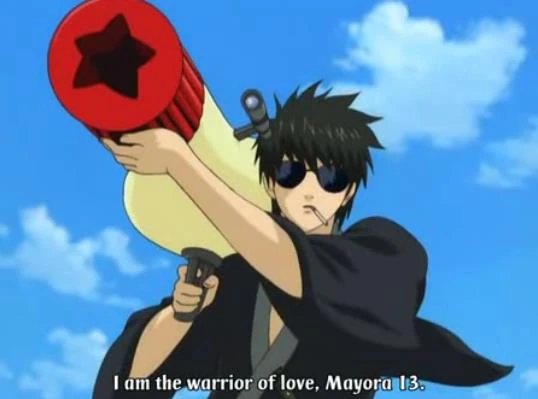
You name reminds me of Mayora 13 from gintama.
Mon, 06/16/2014 - 23:14
#98
Noodles
Noodles, as most people realize, are a big part of the Asian diet. And this is certainly true in Japan.
There are basically 4 kinds of noodles: ramen, udon, somen and soba.
Let’s start with ramen since that’s probably the most well-known.
Ramen is considered to be a Japanese noodle soup, but Japanese people actually consider it to be Chinese noodles, made from wheat, salt and water, and sometimes eggs. Ramen is served with a meat or fish-based stock and soy sauce broth. Floating in the soup is a slice of pork, some dried seaweed, green onions, and kamaboko, which is rubbery solidified pureed white fish.
Udon is similar to ramen but the noodles are thicker and whiter. You will find a greater variety of things floating in udon, such as tempura or mushrooms. There’s even a curry version. (But then, there’s a curry version of pretty much everything in Japan.)
Somen noodles are very thin and usually served cold with a sauce you can dip the noodles in. It is not usually a soup, but rather more like a pure pasta. Various shredded things can be placed on top such as cucumbers, eggs, and ham.
Soba is actually the name for buckwheat. Yakisoba (fried noodles) is extremely popular in Japan. It’s dryer than chow mein but has similarities. Soba noodles might also be served cold as brown or beige colored noodles.
Tue, 06/17/2014 - 06:01
#99

I'm asking this cuz i luuvvv piano!
Is it real that piano is the most popular instrument in Japan?
I just got the feeling about it after watching this video -> http://youtube.com/#/watch?v=0B91ORpK3Qw (The link may or may not work because it's a link I copy paste in my phone. The real link I got from my phone is with "m." like "m.youtube.com")
Not just that, but I've also heard many piano music in some of the anime action/fighting movie I ever watched.
Wed, 06/18/2014 - 23:04
#100
Music in Japan
It’s fair to say that Japanese people are quite musically-inclined. Nearly half of Japanese adults play a musical instrument, with piano being the most popular by far. In fact, about 40% of women in Japan learn the piano. The higher your family’s income, the more likely it is that the daughter(s) studied the piano.
Men prefer the guitar. Other popular music instruments are the electric organ , the trumpet , the flute and Western style drums.
Another instrument that all school children learn is the recorder , but really, this is just for kids.
Traditional Japanese instruments are still played, but by probably close to only 1 or 2% of the population.
The koto is the national instrument of Japan. It is a long stringed instrument that lays on the floor.
Another stringed instrument is the shamisen – a 3-stringed “guitar” or lute used during kabuki and bunraku (comedy) performances.
Most people have seen the taiko drums in movies or somewhere. These are great when a group plays.
Finally, there are the bamboo flutes known as the hotchiku and the shakuhachi . Quick story. I was on a morning run through the mountains. It was around 6 am, and I was passing by an empty campground, and there was a man playing his bamboo flute. The combination of scenery, solitude and sound combined to create a sublimely blissful experience.




OOO could use a Japanese designer for ideas...